

About the exhibition
The title of the exhibition in French is from the book “France périphérique” by Christophe Guilluy, a geographer who adopted a geographical approach to address contemporary political and cultural issues in France. He has focused on the way a fringe has developed in France, in vulnerable areas, some on the outskirts of large cities, others in small and medium-sized towns and in rural areas. He has observed that 60% of the population and 75% of the “new working classes” live in such fringe areas of France, far removed from the big cities of the globalized planet.
Statistics for 2021 reported that more than 9 million people in France were living below the poverty line (i.e. disposable income of less than €1,158/month for one person, or €2,314/month for a family with two children). What’s more, food banks in France have been used by some 2 to 4 million people [statistics for continental France in 2020], which is the ultimate irony for a country that is one of the world’s leading agricultural producers.
I started working on the project in 2015 after spending three years covering extreme social vulnerability (in a Roma slum in 2012, a public hospital and an emergency shelter in 2013 and 2014). I am now focusing on the working class and middle class, and as they change this will mean, in the long term, major changes in French society.
By 1970 poverty was declining and the trend continued until the early 1990s, then remained at the same level until 2008 and the global financial crisis. This upward trend marked a turning point in the history of French society. The negative impact on the economy since 2008 has had the greatest impact on disadvantaged social groups. [REF: “Observatoire des inégalités”]
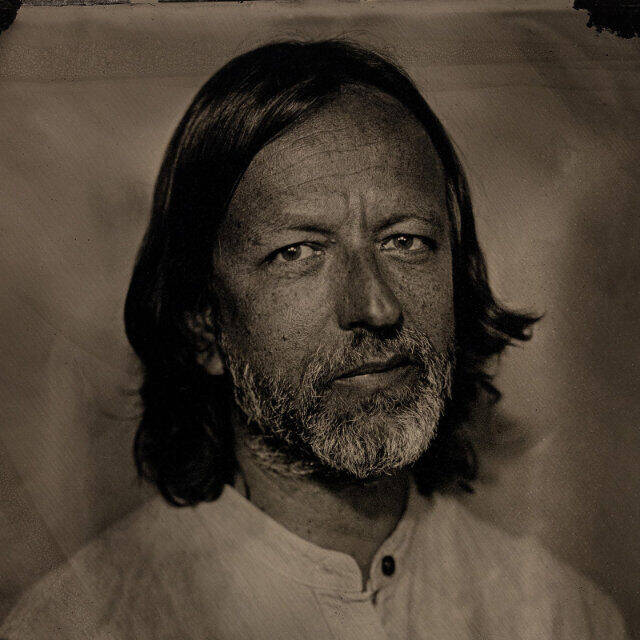
All my projects are long-term endeavors, and listening is a critical part of the approach; the people I see have a real need to be listened to. Over time I can establish a climate of trust, taking photos that convey our discussions, getting close to mysteries and things left unspoken. One of the angles of my work is to get to know the other person and raise questions.
Since the earliest days I have been interested in people living in difficult situations, but my photography is not just a matter of recording information about their living conditions. It goes beyond documentary observations, as I am interested in what it is to be a human being, and that is the substance of my photographic work, including enigmas, gray zones, and light.
Take a virtual tour of this exhibition
Create your account or log in to access virtual exhibitions and get exclusive information about Visa pour l'image.