About the exhibition
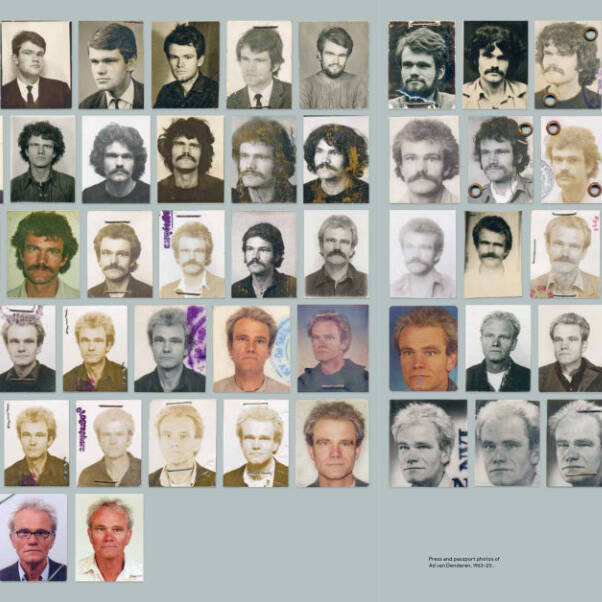
Dutch photographer Ad van Denderen has had a long career in documentary photography, making so many trips for his photo projects that he has often been “en route” as it were. The title of this exhibition also refers to another and perhaps more important sense of being en route.
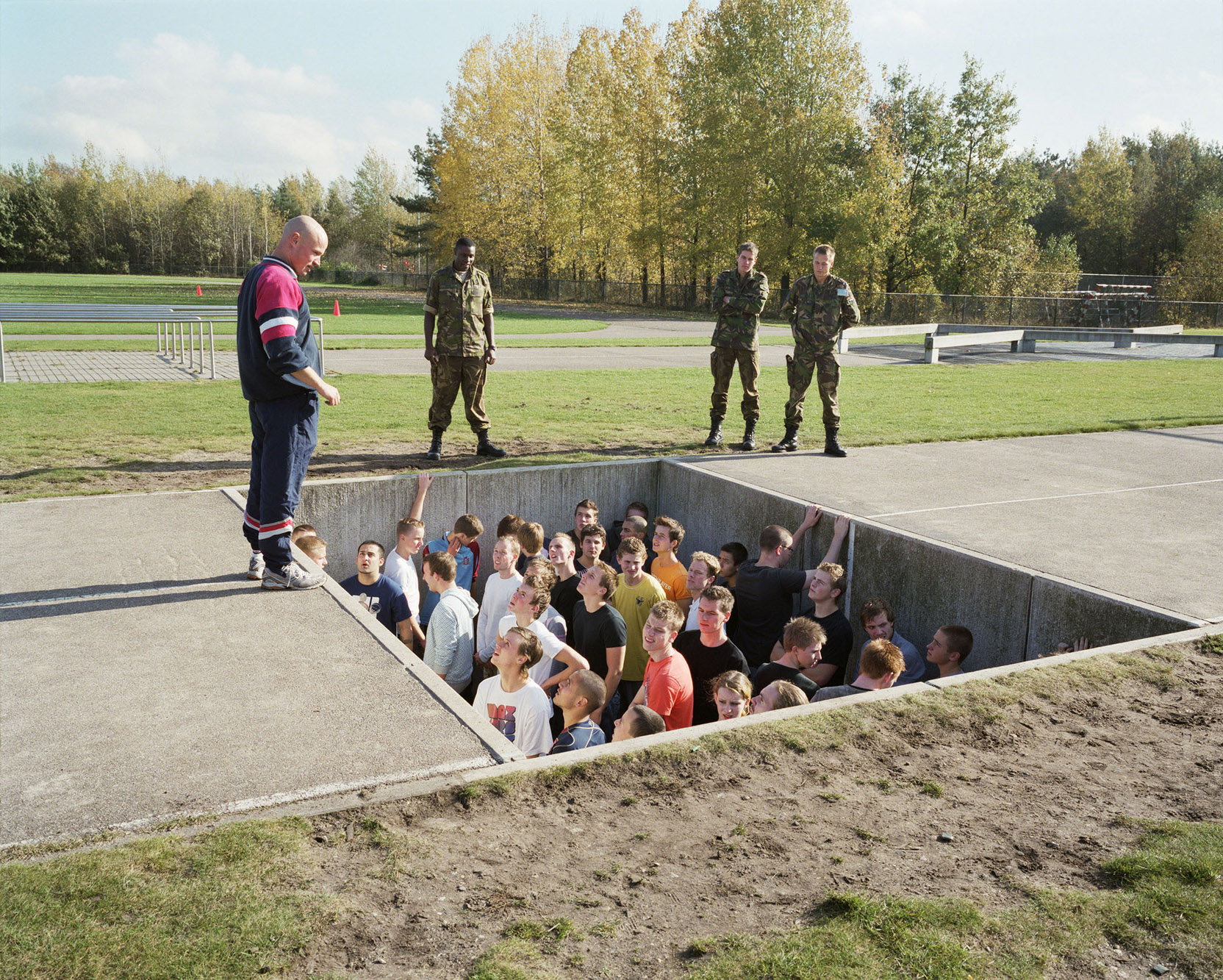
Ad van Denderen has always searched for new ways of creating an image, ways that make a difference. Of particular note are the depth and tenacity with which he often focused on a single subject for years on end. As a photographer, he was interested in the daily lives of people in situations of ongoing conflict. In an increasingly complex world with changing views of photojournalism, he has endeavored to go beyond clichés, and instead of seeking out the latest news stories, focuses on one particular situation and its underlying processes. Van Denderen developed his own narrative photographic signature and then moved on, around the year 2000, to a more conceptual visual idiom. And with this approach, he shifted the boundaries of documentary photography. Reflection and representation became more important than recording. It became necessary to find another use for photographic techniques and new ways of presenting his work. He switched from black-and-white to color, from a 35mm camera to a medium-format one, and from the printed page in a magazine to the exhibition wall. Remarkably, the subjects he has dealt with for so many years, such as migration and geopolitical conflicts, are still relevant today.
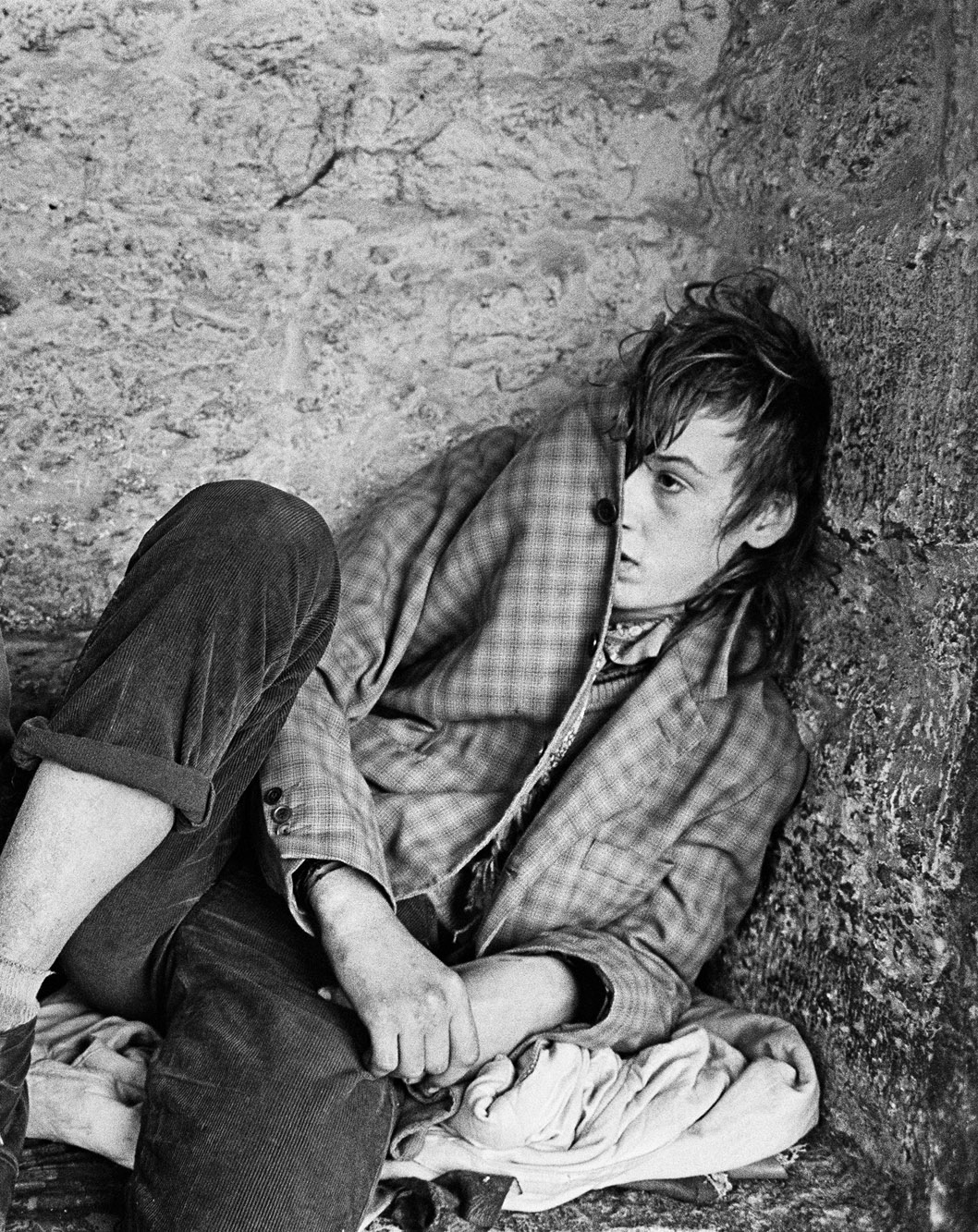
His first major documentary project, Incarcerated 1978-1979, was on a detention center in Amsterdam where he took part in the daily regime, and made friends with some of his fellow detainees. Another early project was on the closure of the coal mines in Winterslag and Waterschei in Belgium: 1987-1988. The mine workers came from all parts of Europe, and after losing their jobs in the mines, did not return to their home countries.
Since 1993, Van Denderen has visited Israel and the Palestinian territories occupied by Israel on numerous occasions, and has used his camera to report on this increasingly complex region, photographing suicide bombings and the intifada, and also showing how both Palestinians and Israelis tried to share their daily lives under these circumstances. The story was published as a photobook, Peace in The Holy Land (1997).
In the project Stone (2017) he showed stones as a connecting element: intifada stones, the separation wall, stones to build the Palestinian city of Rawabi, the Wailing Wall, and Baladia City for the Israel Defense Forces. By then his approach was more conceptual: “I used stone as a metaphor for events in the West Bank. Stones can be a weapon, or an obstacle, but stones can also offer shelter.”
In 1990 Van Denderen travelled to South Africa, to the gold-mining city of Welkom in an area known for tensions between the black and white communities, and where the extreme right-wing Afrikaner Resistance Movement [AWB, Afrikaner Weerstandsbeweging] was dominant. Twenty-five years after the publication of Welkom in Suid-Afrika, Van Denderen returned to work on a collaborative project with Lebohang Tlali who grew up in a township of Welkom. In 2019 the book Welkom Today was published.
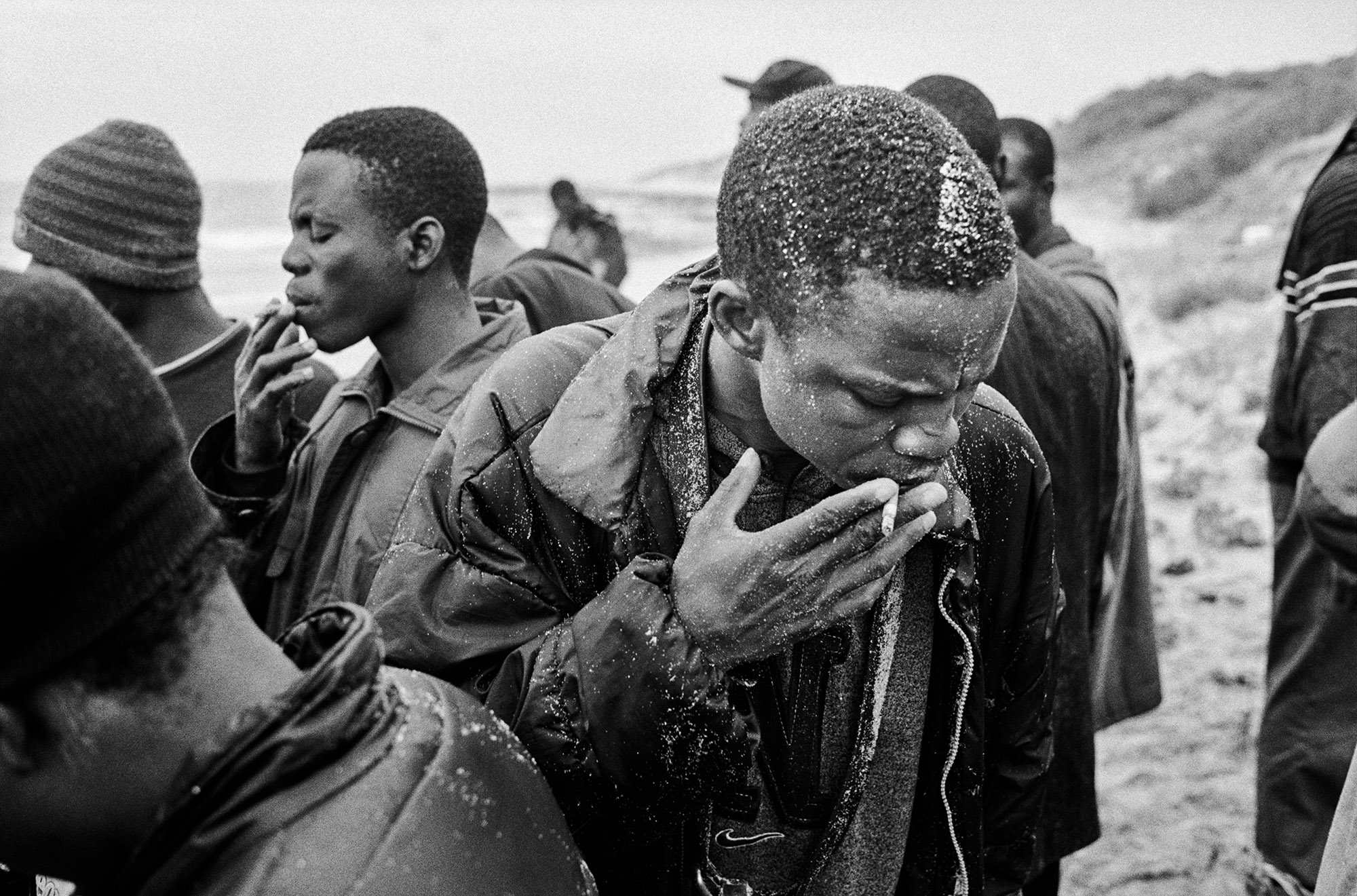
The series Go No Go covers the period from 1985 to 2000 when Van Denderen travelled around the borders of Europe, and was one of the first photographers to witness the horrific stories and distressing scenes of migration.
In So Blue, So Blue – Edges of the Mediterranean, Van Denderen documented the immense economic, political, social, religious and ecological changes taking place around the Mediterranean Sea. People were not featured in the foreground, but were rather actors in a landscape marked by human behavior.
Frits Gierstberg
Curator, Nederlands Fotomuseum, Rotterdam, The Netherlands
Take a virtual tour of this exhibition
Create your account or log in to access virtual exhibitions and get exclusive information about Visa pour l'image.