
About the exhibition
Winner of the Humanitarian Visa d’or Award – International Committee of the Red Cross (ICRC) 2020
Mexico has thirty-two federal states, and many can compete for the title of the most violent state. Guanajuato, Colima, Jalisco, Michoacán, Sonora, Tamaulipas, Veracruz, Chihuahua, and Guerrero are names often cited in reports by international media on increasingly horrific dramas and atrocities.
Every superlative could apply to the state of Guerrero, starting with geographical features and weather conditions, on the southwestern coast, where there is the largest opium-poppy growing area in the country, set in natural mountain fortresses surrounding valleys, and protecting criminals. Acapulco, the biggest city in Guerrero state, is part Miami, part Saint-Tropez, and was once a great attraction for the American jet-set with names such as Elizabeth Taylor and Ronald Reagan, but it has lost its glitter, and today it is bullets that are flying. Acapulco is clearly Number 1 in the ranking of Mexico’s most dangerous cities, registering 874 murders in 2018, a record set only to be broken in 2019, and again, no doubt, in 2020.
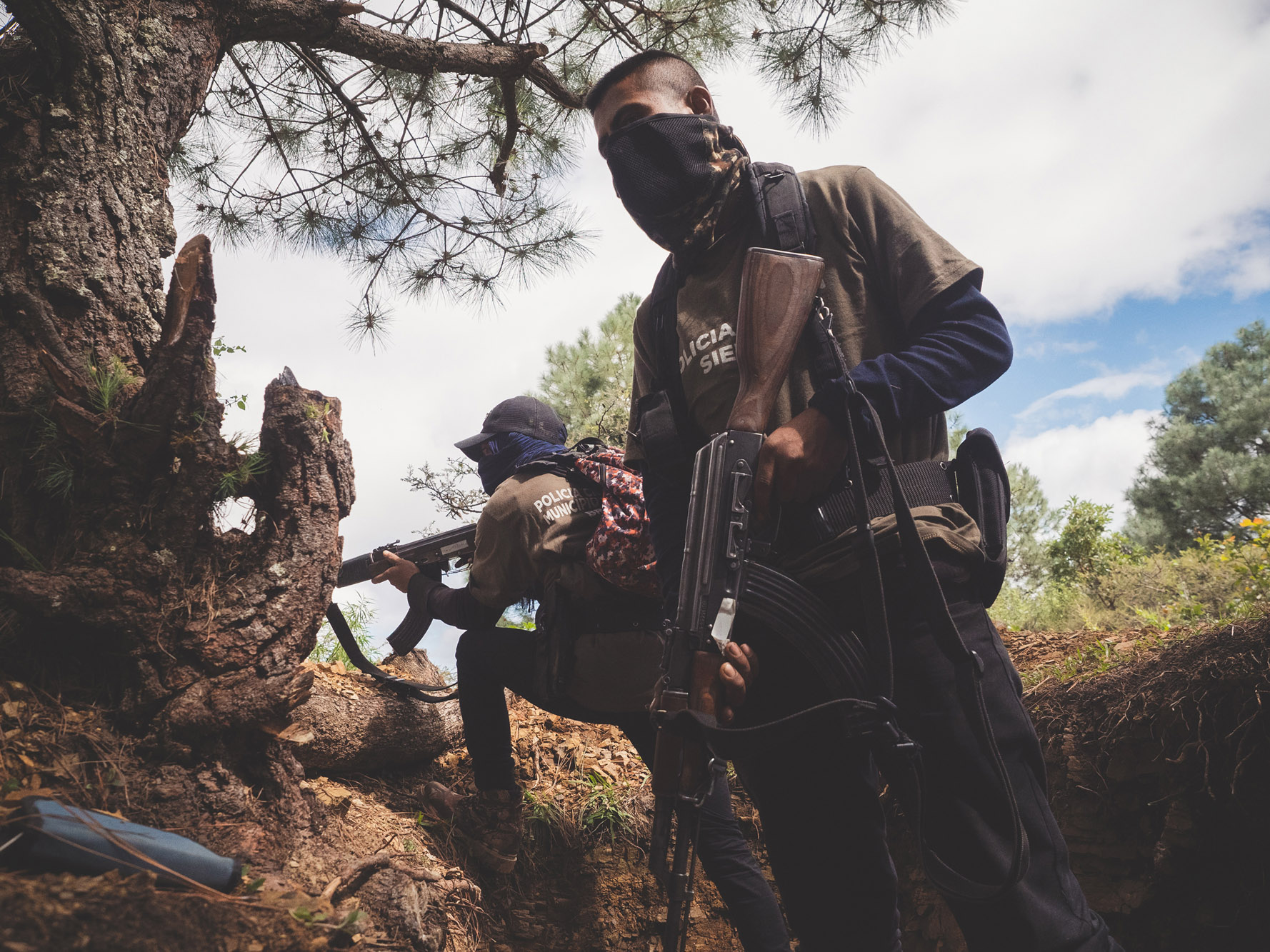
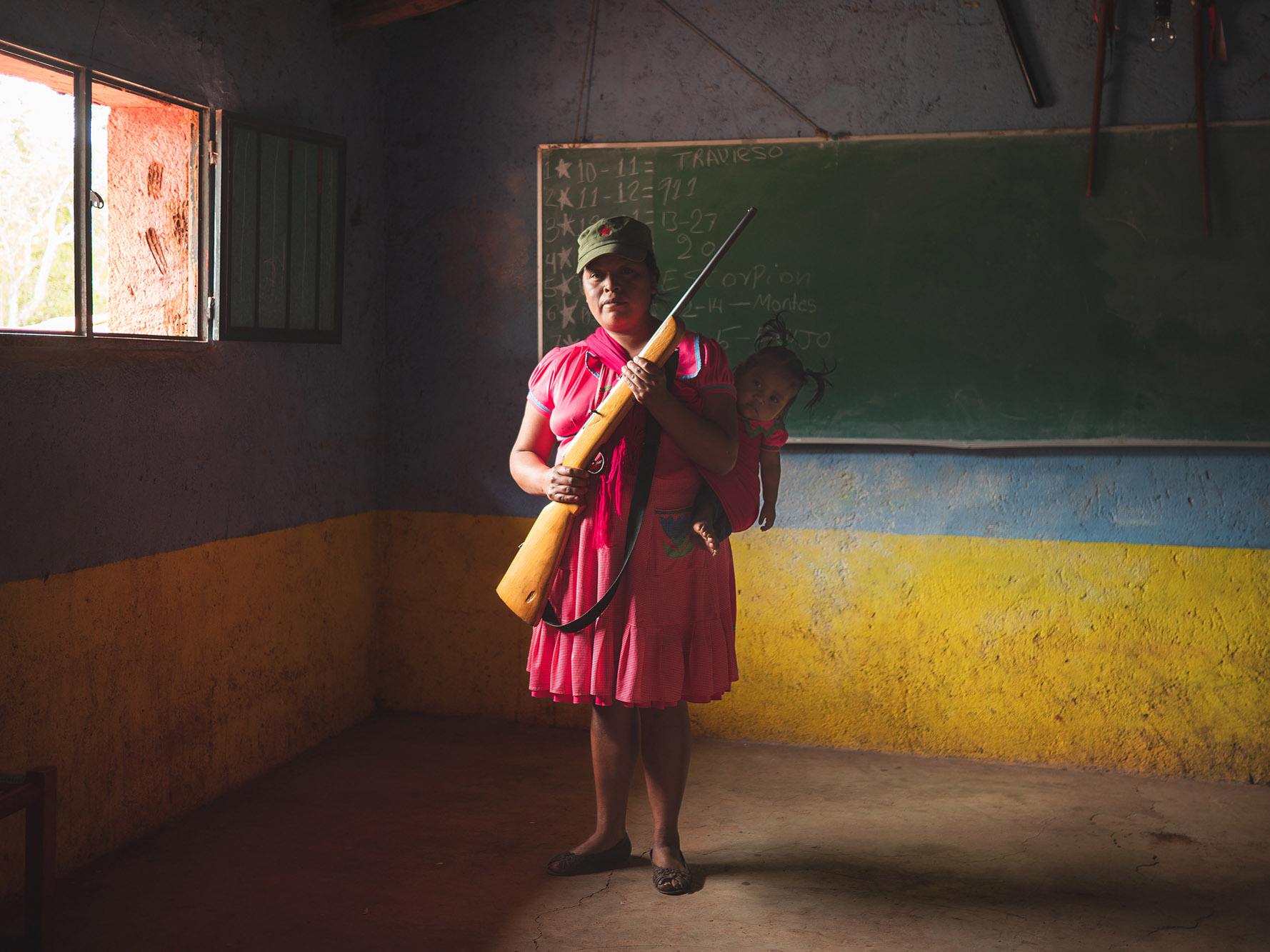
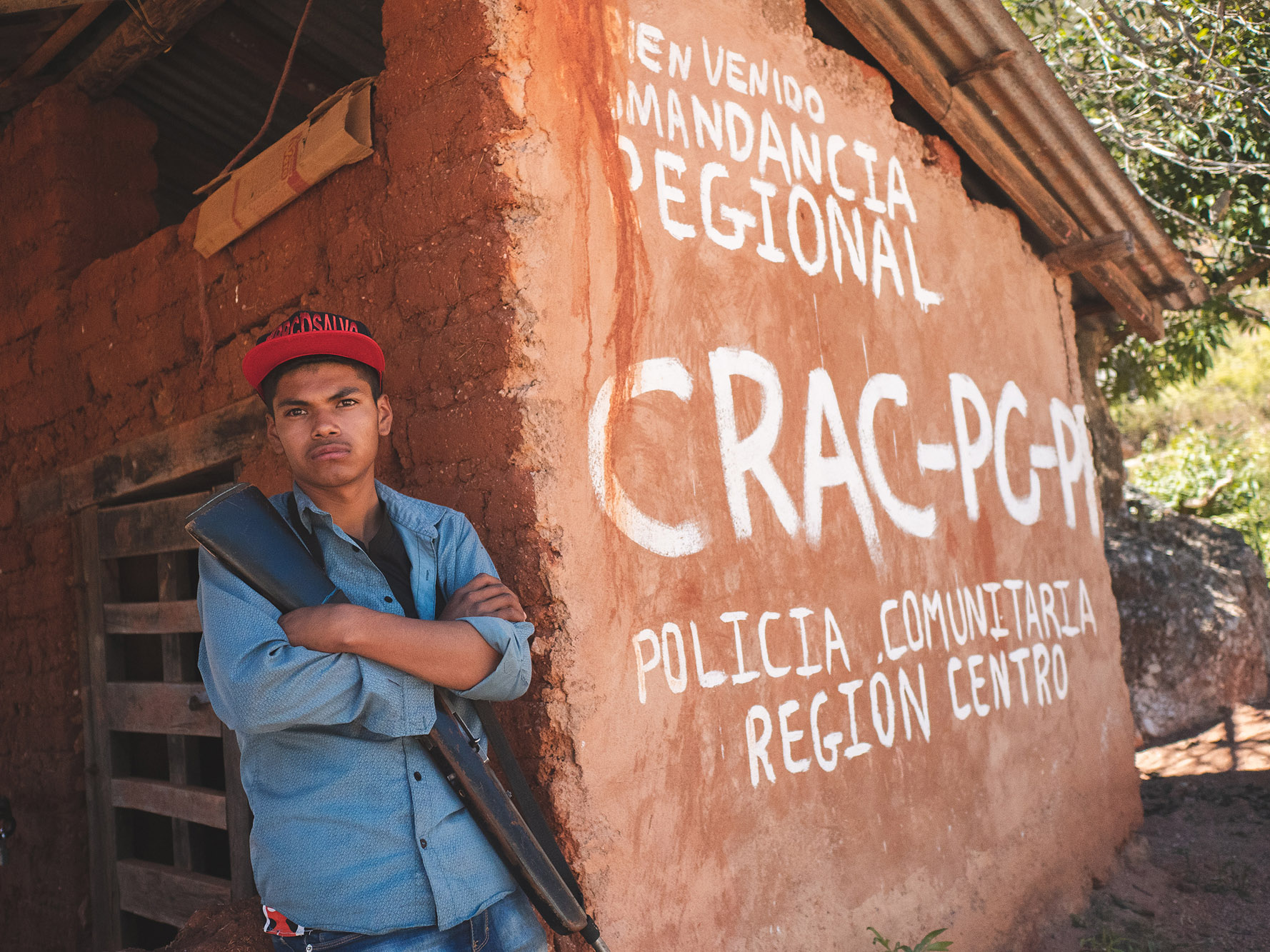
Guerrero is the battlefield for more than forty different groups in a ruthless war for territorial control. There are the cartels, such as the Jalisco New Generation Cartel (CJNG), once the armed wing of the Sinaloa cartel, but now independent; there are “conventional” criminal organizations and networks, and over recent years, there have been self-defense groups. Communities caught in the crossfire have no faith in corrupt police forces or elected officials with ties to traffickers, so have formed their own armed self-defense militias; but to survive, they often have no other option than to be part of the trafficking. To increase their numbers, some of these rough-and-ready community forces even enroll children, training them to handle weapons.
The report, first begun as a personal initiative, was commissioned by Le Figaro Magazine. Alfredo Bosco shows a story of blind violence, of institutionalized violence in a country where, last year, 34,582 people were murdered, focusing on the specific situation in Guerrero, exploring the state which, to all intents and purposes, has been forgotten.
Vincent Jolly
Feature reporter, Le Figaro Magazine
Take a virtual tour of this exhibition
Create your account or log in to access virtual exhibitions and get exclusive information about Visa pour l'image.